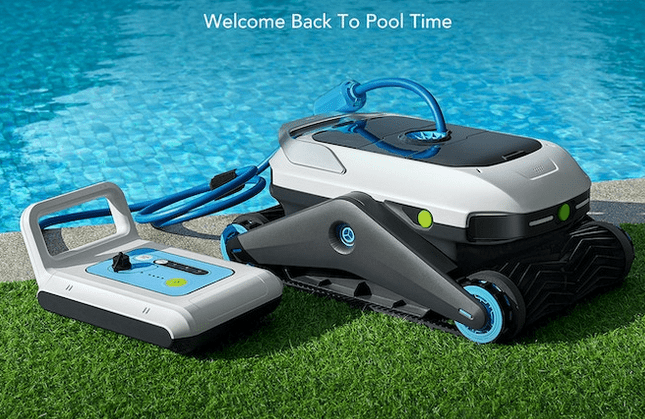
It's the technology that drives a robotic cleaner to move. This precise movement creates an "smart appliance" which enables hands-free operation. Navigation and programming are crucial to not only ensuring the pool is in good condition but also how effectively and thoroughly it's cleaned. Understanding these systems can help you find a robot specifically designed to wash your pool efficiently and effectively. You will also be able to reduce energy consumption by selecting a machine with less cords.
1. The core navigation types include random vs. smart.
The robotic cleaners are classified into two distinct categories.
Random (Bump-and-Switch/Bump-and-Turn): Entry-level and older models use this method. The robot moves in a straight direction until it comes into contact with walls or obstacles before turning into a random direction and continue. It is inefficient and often fails to find zones (especially when the pool has complicated forms). It also takes more time and uses more energy. It is prone to be stuck and also repeats areas it has already cleaned.
Smart (Algorithmic/Systematic): Mid-range to premium models use advanced navigation. The gyroscopes can be powered through accelerometers, optical sensors or algorithms in software which map the dimensions of the pool. The robot cleans the pool in an efficient, pre-planned pattern, like an entire floor scan, and wall climbs in the form of a grid. This makes sure that the robot is able to cover every area in a short duration without repeating the same process.
2. Gyroscopic navigation explained.
It is a well-known and highly effective technique of navigation. The robot has the gyroscope as an internal guide. It is able to determine the robot's direction and rotation with great precision. This enables it to be in a straight line, and to create precise grid patterns across the pool. It's not affected by transparency of the water or the level of light.
3. The non-negotiable Swivel Cord.
Regardless of navigation intelligence, a swivel cable is a vital feature. The power cable is twisted as the robot changes direction and rotates. The cable is able to rotate freely by a swivel built in the float, or connection point. This stops it from becoming tangled and knotted within the robot. A knotted wire could limit the robot’s reach, cause the robot to get stuck and can cause injuries to the cord.
4. Wall-Climbing and Transition Intelligence
One of the most important programming aspects is the way in which the robot manages the transition from the floor to the wall and back.
Robots equipped with sophisticated sensors and motor torque feedback can detect when they're near an obstruction.
Ascent/Descent They are programmed so they enter at an angle and then utilize their drive track and water thrust for a smooth ascent. The top models can get rid of the dirt until they reach the waterline, and then slow down before proceeding to descend.
Cleaning Cove: The curved transition between the wall and floor (the cove) is a trap for debris. Navigation is a good thing and also includes a particular move for this region.
5. Anti-Stuck and Obstacle avoidance functions.
Ladders, main drainages, stairs, and ladders are all obstacles in swimming pools. Programming can help mitigate issues.
Software Intelligence: Smart robots are programmed to recognize the moment they get stuck (e.g. the drive wheels spin without movement) and will execute a escape sequence that includes reversing the direction and changing direction.
Sensors. Certain cleaners with high-end features have sensors on the front to identify obstacles. This allows them to create a cleaner route by avoiding obstacles.
Design: Low profile designs and rounded surfaces are deliberately created for robots to be able to glide across obstacles instead of being caught by them.
6. Cleaning Cycle Programming and Customization.
Modern robotics come pre-programmed with different cycle. You can pick the one that is most suitable for your requirements.
Quick Clean (1 hour) Quick daily clean-up that focuses on the pool's floor.
Standard Clean (2-2.5 hours) Complete cycle that cleans floor walls, walls, and the waterline with an organized pattern.
Floor Only: Saves energy if there is no dust on the floor but there are walls that need cleaning.
Weekly cycle/Extended clean A longer-lasting scrub for a more thorough cleaning, with often more attention to the walls.
7. Impact of Navigation on Energy Consumption
Intelligent navigation is directly connected to energy efficiency. It is easier to predict the amount of time it takes a robot to cover the area when they employ a planned approach. A robot that uses random paths can take between 3 and 4 hrs to do the same thing that a smart nav robot could complete in two hours which means it consumes more energy.
8. The purpose of drive systems: Tracks or Wheels? Wheels.
The propulsion technique influences navigational and climbing capabilities.
Rubber Tracks provide superior traction and grip on all surfaces including fiberglass, vinyl and even smooth vinyl. These tracks are specifically designed to climb walls as well as navigate over obstacles. They usually come with robust, more expensive models.
A lot of models come with wheels. Wheels: Common on many models.
9. Waterline Cleaning Programming
This is the hallmark of advanced programming. Robots aren't designed to reach the waterline randomly that's what they do. The best models will stop at the waterline and then increase brush speed and suction power. Then, they continue to travel around the pool circumference for a certain amount of time, scrubbing off all debris.
10. Weekly Scheduling is the "Set it and forget It".
A robot with a weekly timer built in is the best way to make life easier. It is possible to program a robot to start cleaning cycles automatically at certain dates and times (e.g. Monday, Wednesday and Friday 10:00 am). The robot will wash your pool automatically, without you having to connect it manually. This feature is only enabled by a robot that has reliable and intelligent navigation. This is because you will not be able to intervene when there is a problem. Take a look at the best pool cleaning tips for blog recommendations including reviews on robotic pool cleaners, swimming pool service companies, swimming pool crawler, the pool cleaner, robotic pool sweep, pool store, pool sweeper robot, swimming pool, swimming pool robot cleaner, pool waterline cleaner and more.
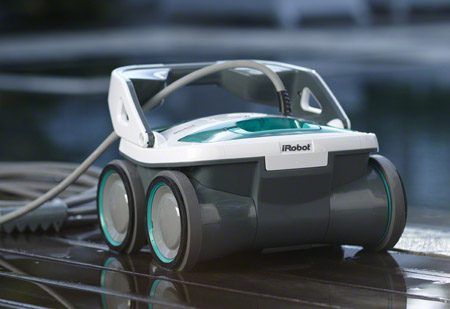
Top 10 Tips On The Power Supply And Efficiency Of Robot Pool Cleaners
It is vital to understand the power source and energy efficiency when evaluating robotic cleaners. This will impact the overall cost of operation, as well as the environmental impact of your pool and convenience. The newer robotic cleaners don't depend on the main pool pump. It's a very energy-intensive system. They are controlled independently by an efficient low-voltage motor that is high-efficiency. The most significant benefit of these machines is that they can save huge quantities of energy. Not all robots, however, are the same. If you consider the particulars of power consumption, operating modes, as well as the infrastructure required, you'll be able to select a model which maximizes performance without consuming a lot of energy.
1. The independent Low Voltage Operation is the main advantage.
This is the basic idea. A robotic cleaner comes with its own motor and pump that are powered by a separate plug-in transformer. It operates on a low-voltage DC voltage (e.g. 24, 32V), making it more reliable and safe to run than a 1.5 or 2.5 HP main pool pump. This allows the robot to run without the requirement of running your main pump.
2. Watts. Horsepower.
It is crucial to know the savings you could make. The primary pump in an average pool is between 1,500 and 2,500 watts per hour. A top-quality robot pool cleaner in contrast, uses between 150 to 300 watts per hour throughout its cleaning process. This translates to a reduction in energy by around 90%. Running a robot for three hours uses about the same amount of energy operating a few household lightbulbs for the same time, relative to the main pump that is a big appliance.
3. The critical role of the DC Power Supply/Transformer.
The black box between your outlet and the cable of the robot isn't just a simple power cord. It's an intelligent transformer. The transformer converts 110 and 120V household AC current into DC power the robot is able to use. It is vital that this component be high-quality to ensure the safety and efficiency. The circuitry is also utilized to control the programming process and offers Ground Fault Circuit Interruption protection (GFCI) that shuts off the power immediately when there is an electrical problem detected.
4. Smart Programming for Increased Efficiency.
Programming the robot directly affects its energy consumption. Efficiency is enhanced by the ability to choose specific cleaning cycles.
Quick Clean/Floor Mode: The robot operates in this mode for a short time period (e.g. one hour) with just the floor-cleaning algorithms activated, consuming less energy.
Full Clean Mode Full Clean Mode: Standard 2.5 to 3 hours cycle to ensure thorough cleaning.
It is crucial to only use energy that is needed for the task in hand. This will prevent the expenditure of time and money for extended runs.
5. The Impact of Navigation on Energy Consumption.
The way an automated robot has a direct relationship to the energy it uses. A robot that is based on random navigation (bump and turns) is not efficient. It can take hours to cover the entire pool. A robot with systematic, gyroscopically-guided navigation cleans the pool in a methodical grid pattern, completing the job in a shorter, predictable timeframe (e.g., 2.5 hours), thereby using less total energy.
6. GFCI Outlet Requirement & Location.
To ensure total security, it is essential to connect the electrical supply of your robot into a Ground Fault Circuit Interrupter. These outlets are usually located in the bathrooms and kitchens. If your swimming pool doesn't have a GFCI outlet, one must be installed by an electrician who is licensed prior to using the cleaner. The transformer must be installed at least 10 feet from the edge of your pool in order to protect it against water splashes and other elements.
7. The length of the cable and the drop in voltage
The electricity that flows through the cable at low voltage may experience an "voltage drop" when it is stretched over a long distance. Manufacturers have a minimum cable length (often 50-60 feet) in order to make a point. There isn't enough power available to the robot if the cable length exceeds this and results in poor performance and slow movement. Check that the cable on the robot is long enough to allow it to travel to the furthest point of your pool from the outlet. However, you should not utilize an extension cord because it can cause voltage drop, and cause an issue with safety.
8. Compare the efficiency of other more efficient types of cleaning.
Understanding what you are trying to compare the robot with will allow you to justify the initial cost.
Suction Side Cleaners: These depend completely on the main pump. These cleaners require you to operate your pump for at least 6-8 hours a day that results in extremely high energy costs.
Pressure-Side Cleaning: This type of cleaner utilizes your primary pump for pressure, and an additional pump that will add an extra 1-1.5 HP to the ongoing energy consumption.
The robot's performance alone makes it the best choice for a long-term solution to save money.
9. The process of calculating operating costs
Calculate the cost of running your robot. The formula for costs is (Watts/1000 x Hours) x Electricity Cost ($ perkWh)
Example: A 200-watt robotic device that is used for 3 hours, three times per week at $0.15 for each unit of electric power.
(200W / 1000) = 0.2 kW. 0.2 kW x 9 hours per week = 1.8 kWh. 1.8 kWh x $0.15 = $0.27 per week, which is approximately $14 over the course of a year.
10. Energy Efficiency is an Quality Marker
In general, a robot with more efficient and advanced motor technology will be of better quality. A machine that is able to clean thoroughly in less time and with less power usually indicates superior engineering, better navigation software as well as a more powerful yet efficient pumping system. The true measure of efficiency isn't about a powerful motor that can provide more power to suction and climb. It's about a mix of cleaning efficiency in a short time frame with low-wattage. Investing in a well-engineered, efficient motor will pay dividends on your monthly utility bill for years to come. Read the most popular saugroboter pool akku for more tips including pool cleaning systems, in the swimming pool, robot for the pool, swimming pool automatic vacuum, kreepy krauly pool cleaners, max pools, robot to clean the pool, robotic pool cleaners on sale, the swimming pools, cleanest pool and more.